Jinnie Hyojin Bae
← Work
KERB LIFT
KERB LIFT explores how street food traders could grow their businesses beyond an initial incubation programme. Developed for KERB, the service concept proposes a structured accelerator that connects traders' ambitions with practical support and opportunities in the surrounding community.
ROLE Service Designer INDUSTRY Food & Hospitality / Social Enterprise DURATION 2019
Service Design Field Research Stakeholder Analysis Prototyping
01 / THE BRIEF
Strengthening the value of food markets as a public resource
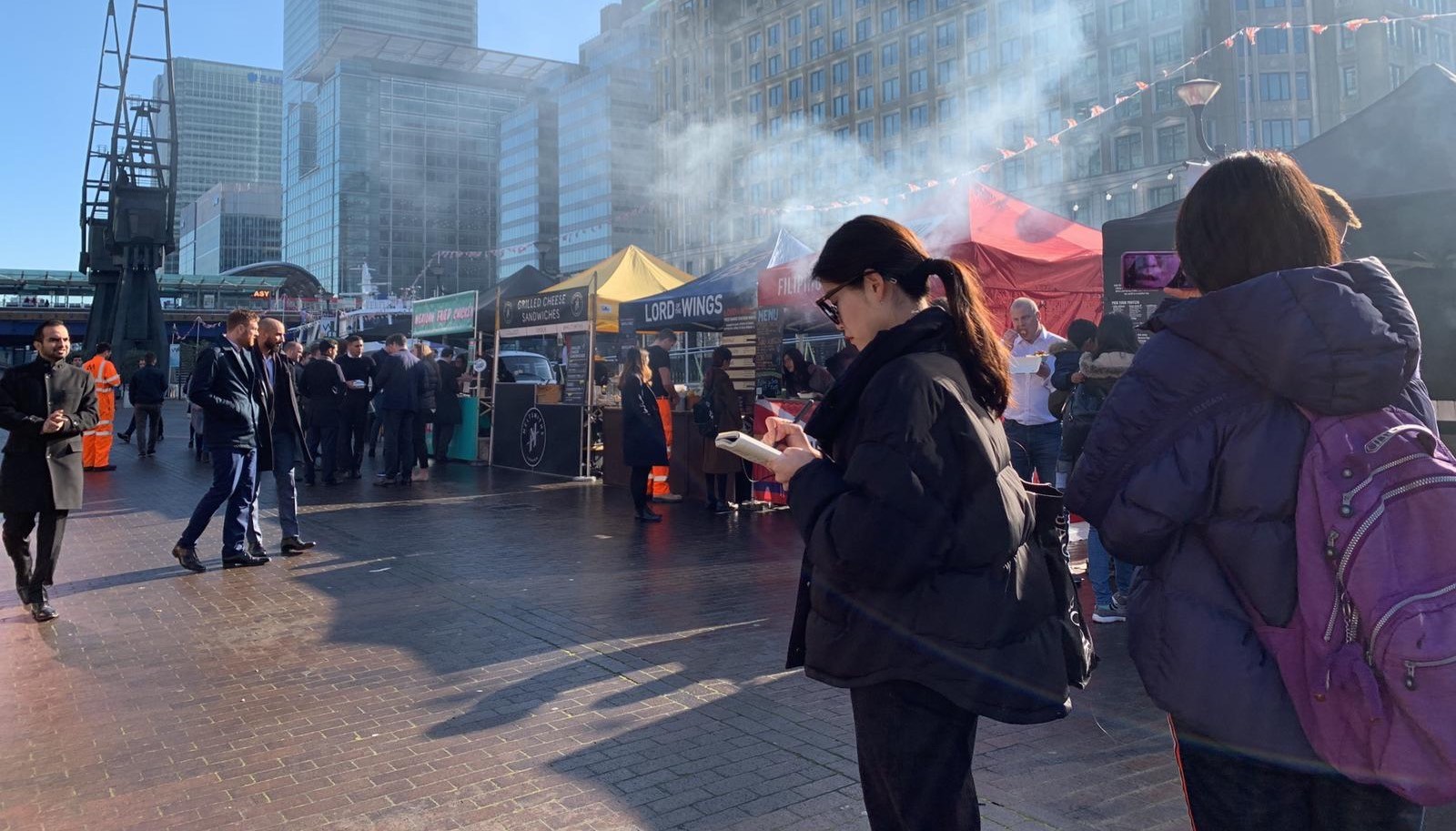
KERB operated street food markets, events and catering services while supporting emerging food businesses through its trader network and incubation programme.
The brief asked us to develop a service proposition that strengthened the value of food markets as a public resource. This meant considering the needs of traders, the public and policymakers, alongside KERB's role in connecting them.
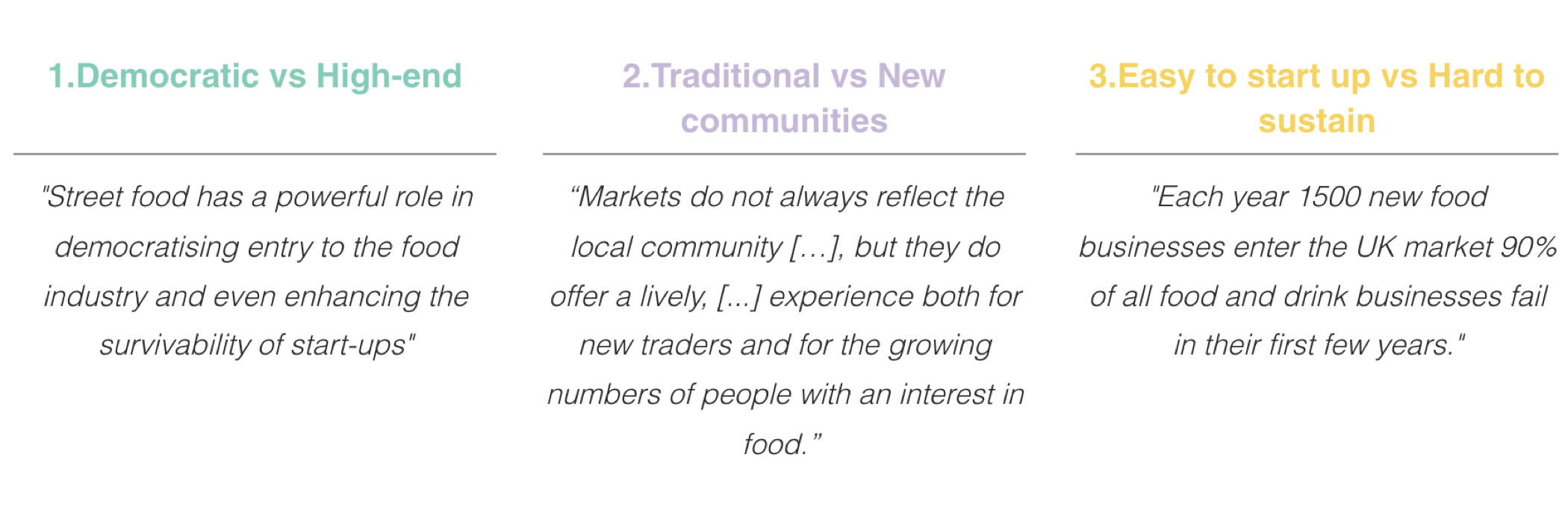
Our research explored three tensions: accessible routes into the food industry alongside increasingly premium market experiences; new market communities alongside established local communities; and the difference between starting a food business and sustaining it.
02 / FINDING THE GAP AFTER INCUBATION
What happens when the programme ends
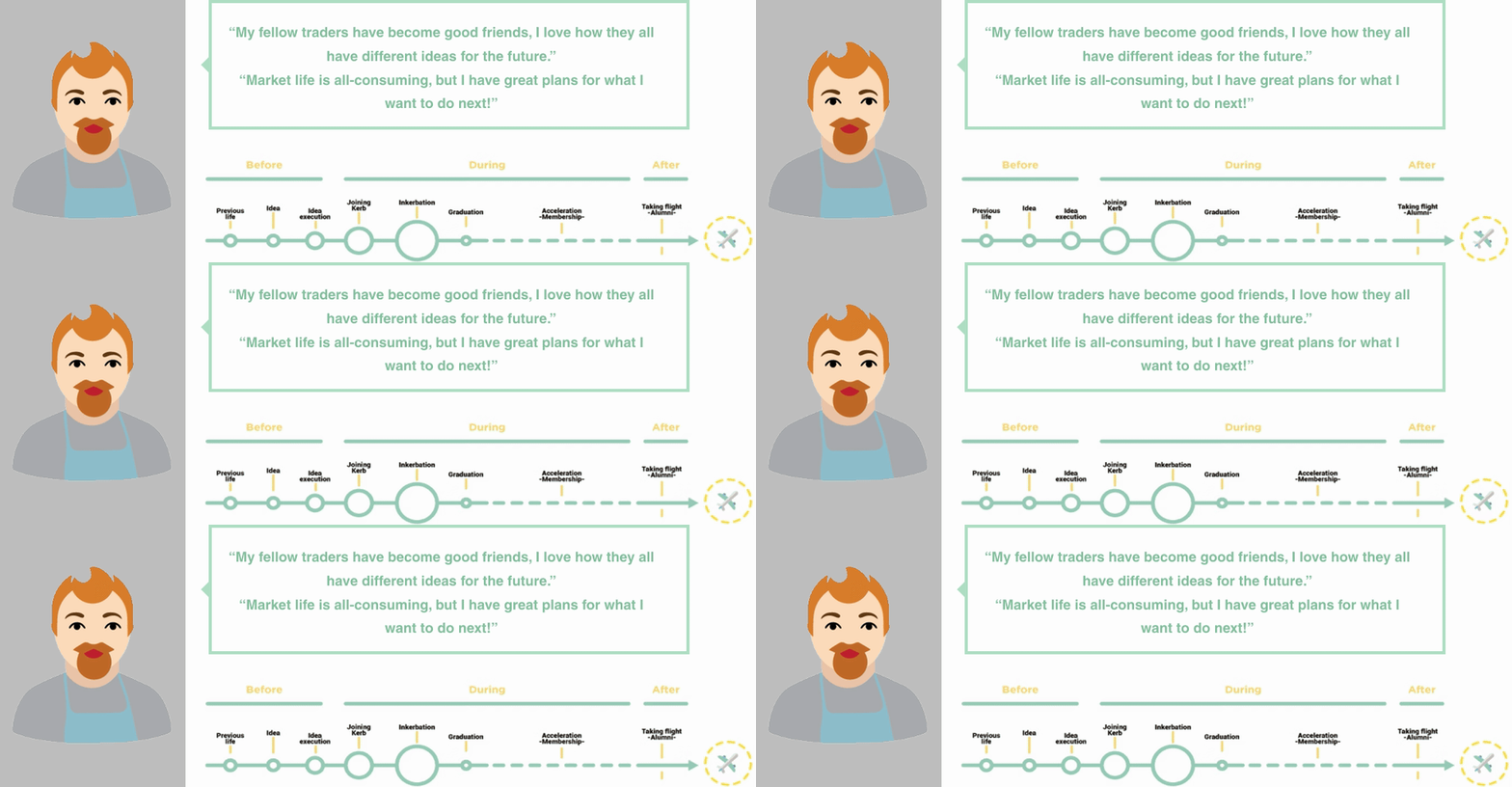
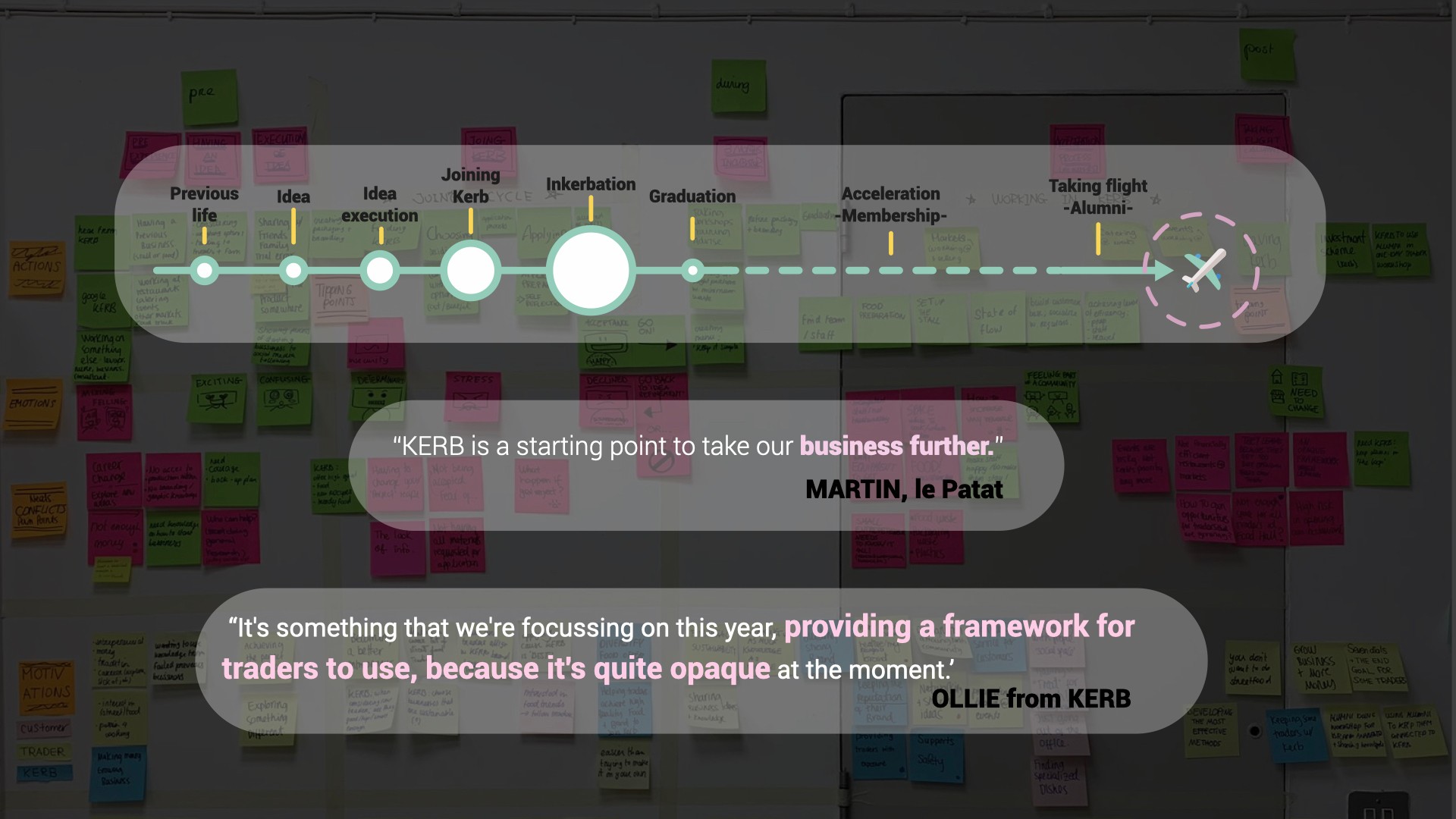
Through field research, stakeholder analysis and trader journey mapping, we examined the experience before, during and after joining KERB.
KERB offered a defined incubation programme, but the subsequent acceleration and alumni stages were less clearly structured. Traders had ambitions for their businesses, yet the route towards those ambitions was harder to navigate alongside the demands of daily market life.
This focused the project on the transition after incubation: helping traders understand what to do next and where to find support.
How might KERB create a clearer path for traders to grow beyond incubation?
03 / TURNING THE OPPORTUNITY INTO A SERVICE
Three priorities that shaped the design direction
We developed KERB LIFT around three priorities.
Make progression clear The gap after incubation called for a more defined sequence of activities. The proposed accelerator broke business development into practical steps, helping traders connect longer-term ambitions with their next decision.
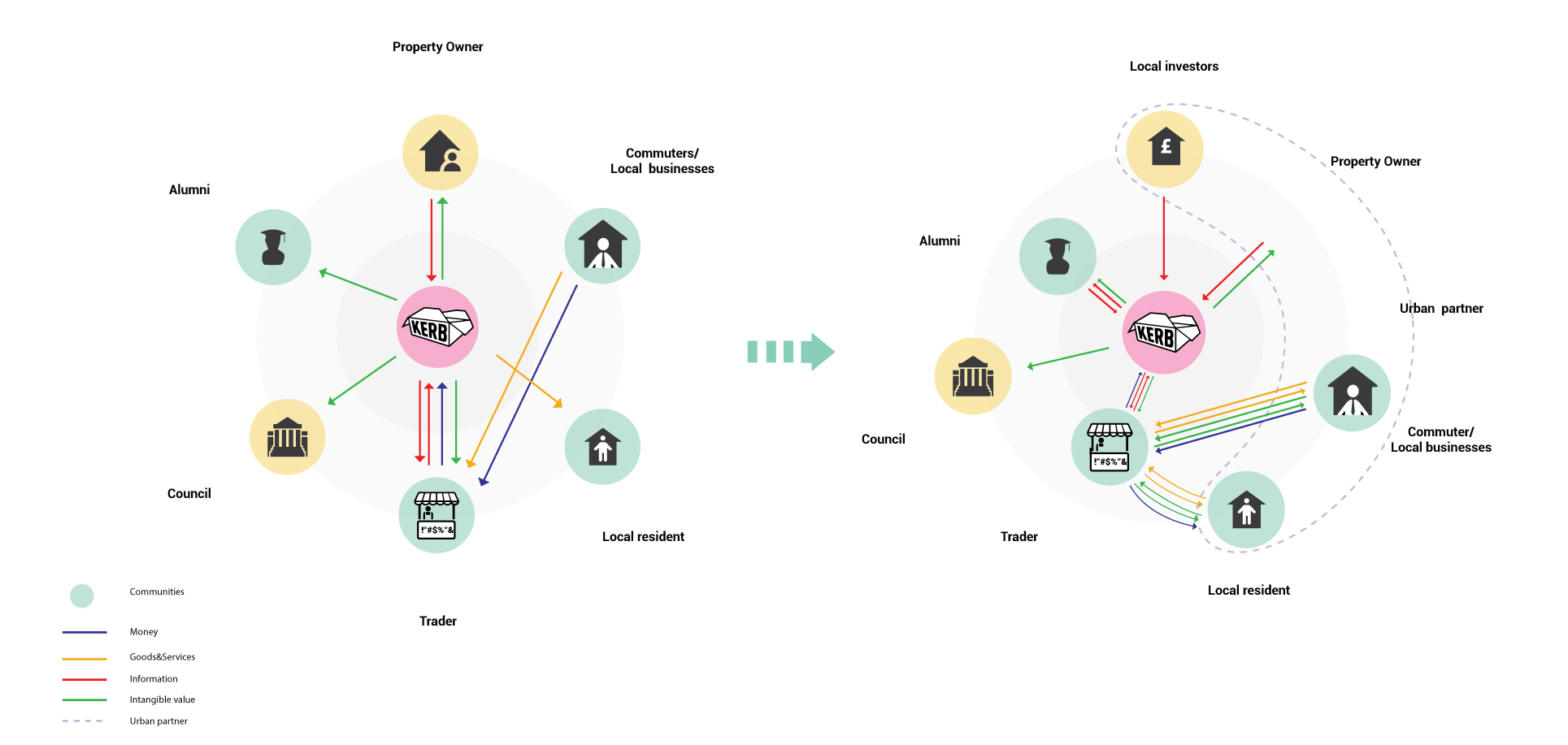
Connect traders with the wider community We explored how KERB could connect its trader network with local residents, businesses, property owners and investors. This positioned the surrounding community as a potential source of relationships and opportunities for growth.
Build support into the journey Workshops, peer review, mentoring and networking were placed at relevant points in the proposed journey. The aim was to connect support with the decisions traders faced as their businesses developed.
04 / INTRODUCING KERB LIFT
An accelerator concept for early-stage food businesses
KERB LIFT is an accelerator concept for early-stage food businesses, connecting traders' needs with opportunities in the surrounding community.
The proposed journey moves from defining an ambition to preparing for an opening.
Define the direction Traders begin with a personal mission board, develop their concept and brand, and build a business plan. Kick-off activities and peer review provide opportunities to discuss and refine their direction.
Secure the foundations The journey then addresses funding, choosing and leasing a location, and securing permits and licences. Workshops and networking connect these decisions with relevant support.
Prepare to open Later stages cover equipment and suppliers, design and layout, hiring staff, advertising and a soft opening. Peer review and mentoring provide further support as plans become more concrete.
Access to KERB's Vault resource was included throughout the proposed journey, alongside workshops and milestone meetings.
05 / DEVELOPING THE JOURNEY AND STAKEHOLDER RELATIONSHIPS
Making the service proposition tangible
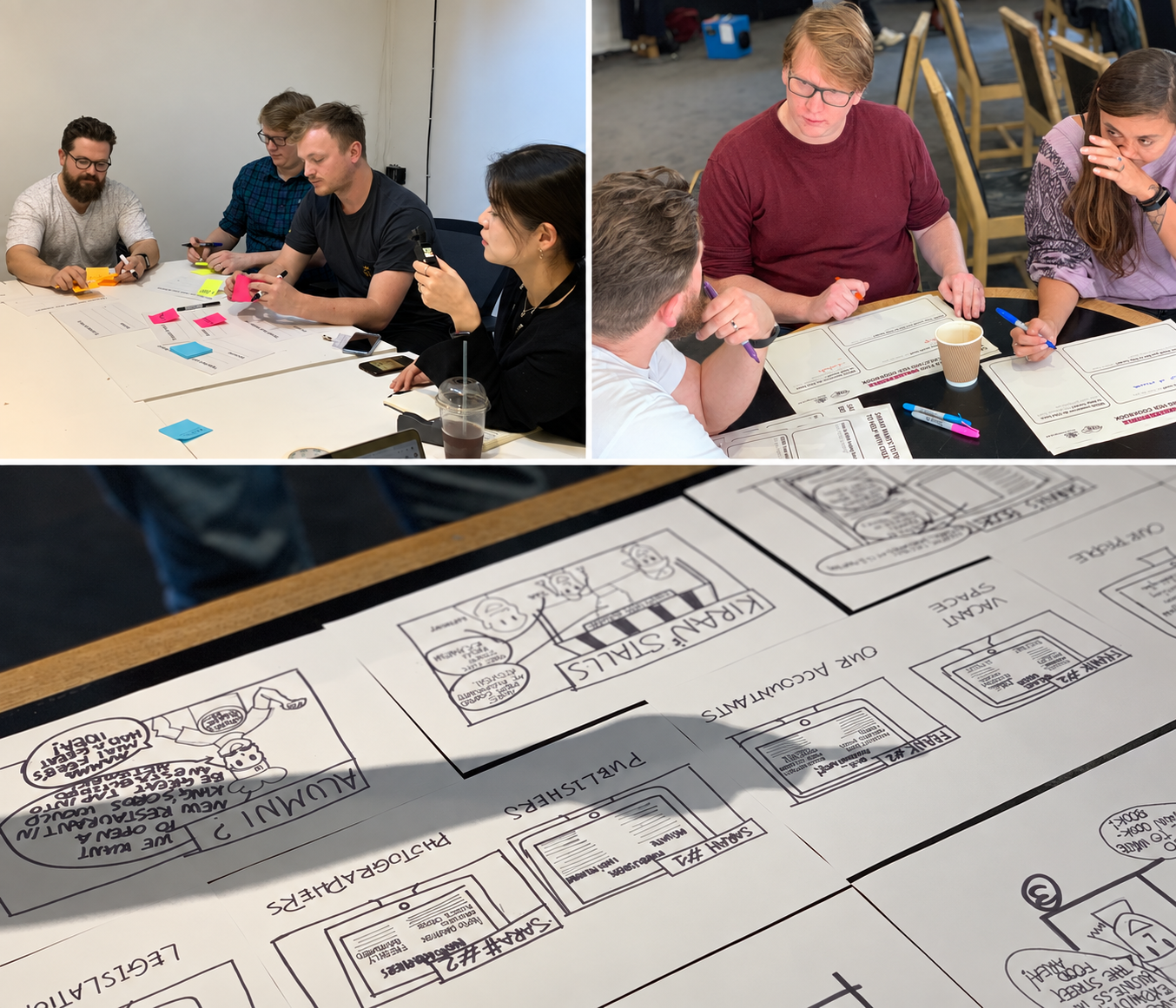
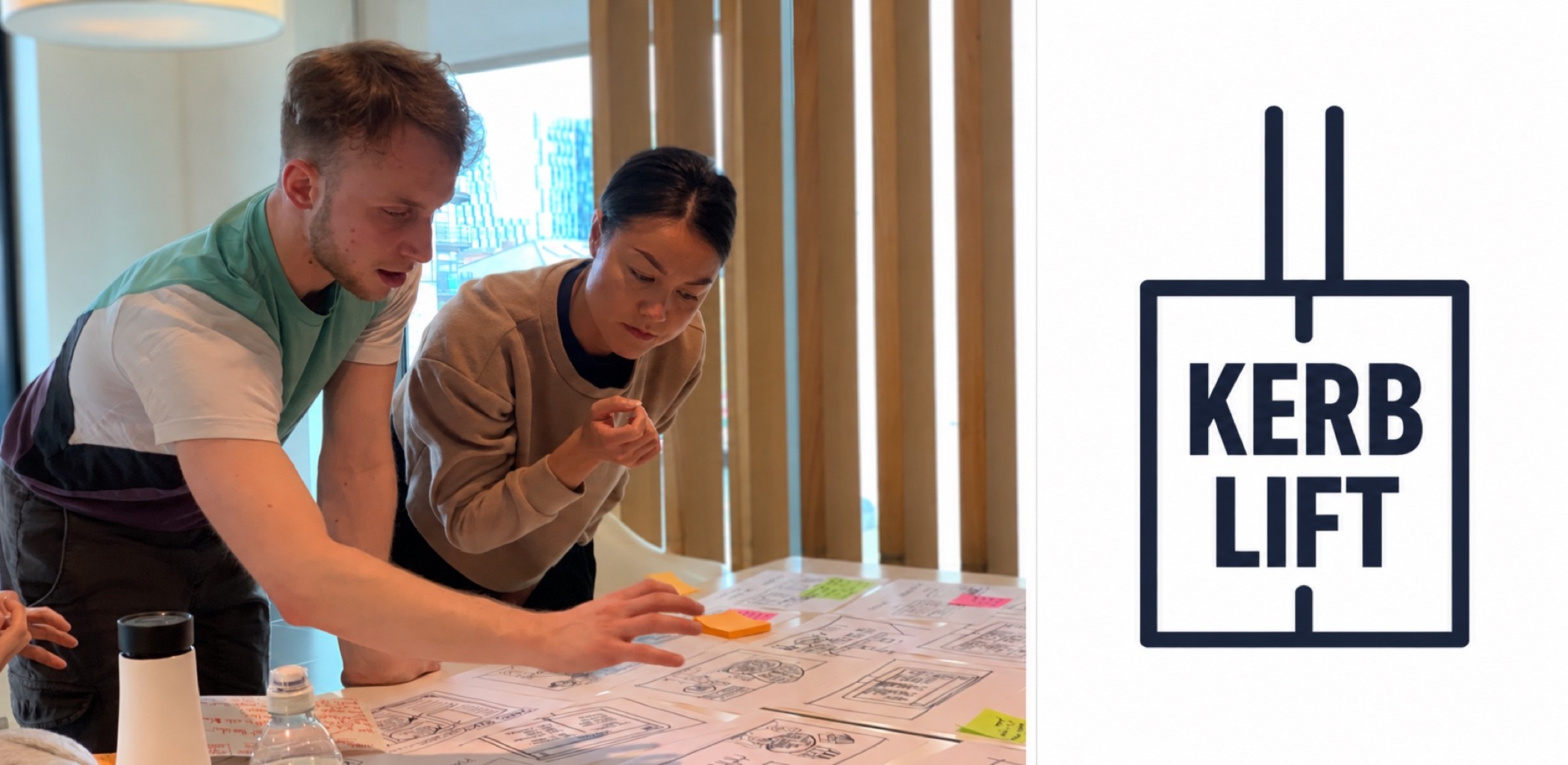
We used journey maps, stakeholder maps and visual prototypes to make the service proposition tangible for workshop discussions.
The journey map brought together the steps traders would take, the support available at each stage and their anticipated emotional experience. This helped frame the accelerator around both practical tasks and the uncertainty involved in growing a business.
The stakeholder map explored how relationships could develop between KERB, traders, alumni and the wider community. It considered exchanges of information, goods and services, money and less tangible value, making the proposed service relationships visible alongside the trader journey.
My contribution included planning and delivering workshops, as well as research, analysis, visualisation and prototyping.
06 / OUTCOME AND NEXT STEPS
A service proposition for growth beyond incubation
The project resulted in KERB LIFT: a service proposition supported by a staged accelerator journey and a proposed stakeholder model.
It translated a broad brief about the public value of food markets into a specific opportunity for KERB: providing clearer support for traders after incubation while strengthening connections with the surrounding community.
The next step would be to test the proposed sequence with traders at different stages of growth, establish which partners could deliver each form of support, and assess the time and resources required from KERB and participating businesses.
Jinnie Hyojin Bae
← Work
KERB LIFT
KERB LIFT explores how street food traders could grow their businesses beyond an initial incubation programme. Developed for KERB, the service concept proposes a structured accelerator that connects traders' ambitions with practical support and opportunities in the surrounding community.
ROLE Service Designer INDUSTRY Food & Hospitality / Social Enterprise DURATION 2019
Service Design Field Research Stakeholder Analysis Prototyping
01 / THE BRIEF
Strengthening the value of food markets as a public resource
KERB operated street food markets, events and catering services while supporting emerging food businesses through its trader network and incubation programme.
The brief asked us to develop a service proposition that strengthened the value of food markets as a public resource. This meant considering the needs of traders, the public and policymakers, alongside KERB's role in connecting them.
Our research explored three tensions: accessible routes into the food industry alongside increasingly premium market experiences; new market communities alongside established local communities; and the difference between starting a food business and sustaining it.
02 / FINDING THE GAP AFTER INCUBATION
What happens when the programme ends
Through field research, stakeholder analysis and trader journey mapping, we examined the experience before, during and after joining KERB.
KERB offered a defined incubation programme, but the subsequent acceleration and alumni stages were less clearly structured. Traders had ambitions for their businesses, yet the route towards those ambitions was harder to navigate alongside the demands of daily market life.
This focused the project on the transition after incubation: helping traders understand what to do next and where to find support.
How might KERB create a clearer path for traders to grow beyond incubation?
03 / TURNING THE OPPORTUNITY INTO A SERVICE
Three priorities that shaped the design direction
We developed KERB LIFT around three priorities.
Make progression clear The gap after incubation called for a more defined sequence of activities. The proposed accelerator broke business development into practical steps, helping traders connect longer-term ambitions with their next decision.
Connect traders with the wider community We explored how KERB could connect its trader network with local residents, businesses, property owners and investors. This positioned the surrounding community as a potential source of relationships and opportunities for growth.
Build support into the journey Workshops, peer review, mentoring and networking were placed at relevant points in the proposed journey. The aim was to connect support with the decisions traders faced as their businesses developed.
04 / INTRODUCING KERB LIFT
An accelerator concept for early-stage food businesses
KERB LIFT is an accelerator concept for early-stage food businesses, connecting traders' needs with opportunities in the surrounding community.
The proposed journey moves from defining an ambition to preparing for an opening.
Define the direction Traders begin with a personal mission board, develop their concept and brand, and build a business plan. Kick-off activities and peer review provide opportunities to discuss and refine their direction.
Secure the foundations The journey then addresses funding, choosing and leasing a location, and securing permits and licences. Workshops and networking connect these decisions with relevant support.
Prepare to open Later stages cover equipment and suppliers, design and layout, hiring staff, advertising and a soft opening. Peer review and mentoring provide further support as plans become more concrete.
Access to KERB's Vault resource was included throughout the proposed journey, alongside workshops and milestone meetings.
05 / DEVELOPING THE JOURNEY AND STAKEHOLDER RELATIONSHIPS
Making the service proposition tangible
We used journey maps, stakeholder maps and visual prototypes to make the service proposition tangible for workshop discussions.
The journey map brought together the steps traders would take, the support available at each stage and their anticipated emotional experience. This helped frame the accelerator around both practical tasks and the uncertainty involved in growing a business.
The stakeholder map explored how relationships could develop between KERB, traders, alumni and the wider community. It considered exchanges of information, goods and services, money and less tangible value, making the proposed service relationships visible alongside the trader journey.
My contribution included planning and delivering workshops, as well as research, analysis, visualisation and prototyping.
06 / OUTCOME AND NEXT STEPS
A service proposition for growth beyond incubation
The project resulted in KERB LIFT: a service proposition supported by a staged accelerator journey and a proposed stakeholder model.
It translated a broad brief about the public value of food markets into a specific opportunity for KERB: providing clearer support for traders after incubation while strengthening connections with the surrounding community.
The next step would be to test the proposed sequence with traders at different stages of growth, establish which partners could deliver each form of support, and assess the time and resources required from KERB and participating businesses.