Jinnie Hyojin Bae
← Work
HYUNDAI MORPH
Developed for Hyundai’s MORPH project, MOSEY and NANO connect future travel scenarios with service systems and vehicle experiences. I contributed to research and framing across MORPH’s four themes and was responsible for all service design work across MOSEY and NANO. Detailed research is omitted to comply with the NDA.
ROLE Service Designer INDUSTRY Automotive / Mobility DURATION 2020
Service Design Research & Framing Journey Mapping Concept Development
01 / THE CHALLENGE
What does it mean to share a journey?
MORPH explored how the sharing economy could reshape mobility services and vehicle design.
Sharing a vehicle introduces questions beyond access and ownership. Who are passengers comfortable travelling with? When do they want to interact? How much privacy and control do they need?
My challenge was to translate changing lifestyles and expectations into service concepts that addressed both the practical and emotional experience of travel.
02 / FRAMING THE OPPORTUNITY
Two service directions for future mobility
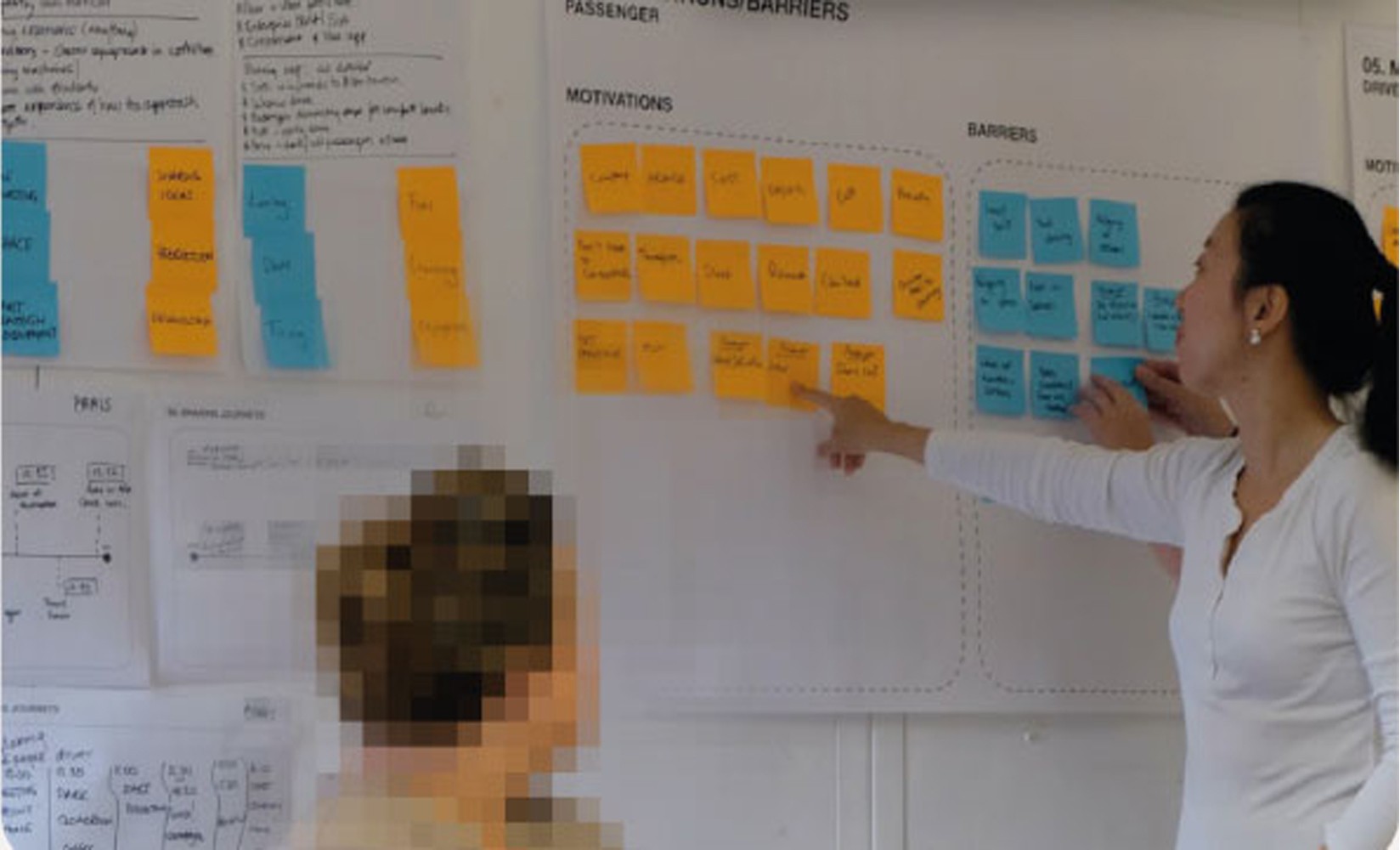
Drawing on the wider project research, I framed future scenarios and identified the jobs people needed a mobility service to fulfil. I developed personas and mapped journeys to connect these needs with service touchpoints and physical spaces.
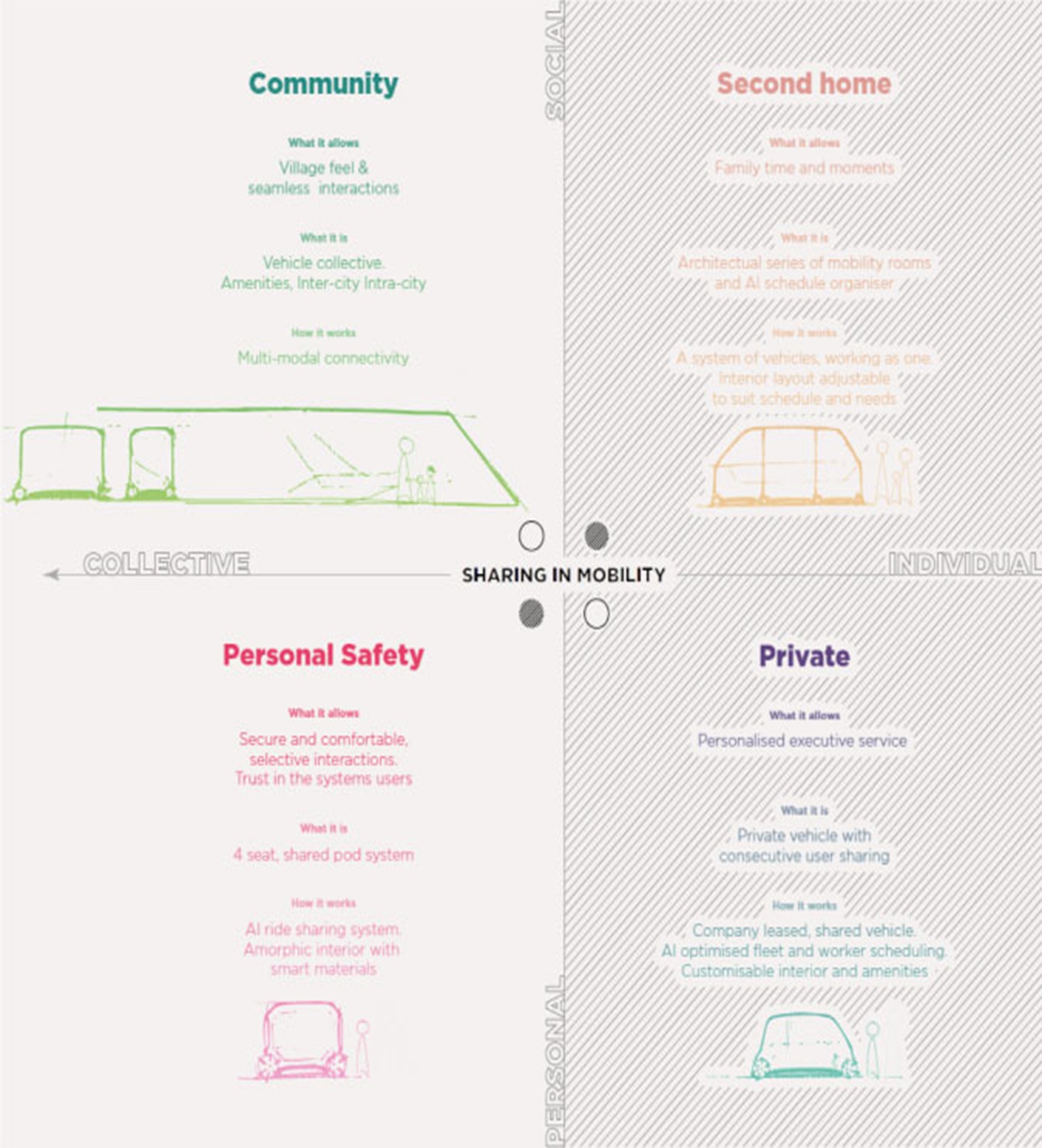
I developed two service directions:
MOSEY — Communities on the Move. A connected intercity service combining local pick-up and drop-off with a choice of private and communal spaces during longer journeys.
NANO — Shared Vehicles, Safe Spaces. A shared taxi concept exploring how adaptable interiors and service support could give passengers greater reassurance and control when travelling with strangers.
I centred both service concepts on the same principle: sharing transport should allow people to choose how they share the experience.
03 / MOSEY
Communities on the move
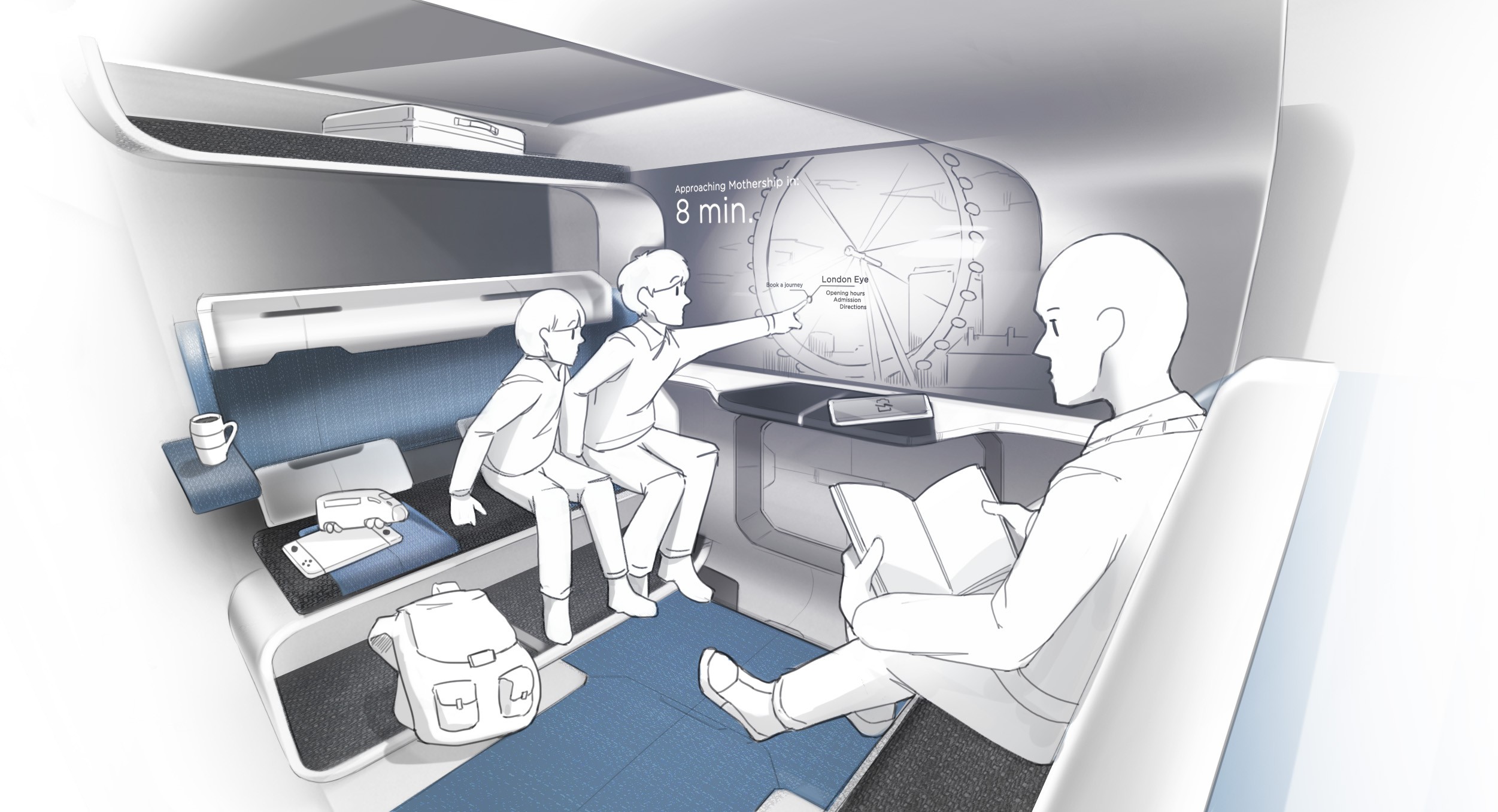
MOSEY explores a door-to-door mobility service that connects local travel with longer intercity journeys. One- and four-seat pods join a larger carrier, the “mothership”, where passengers can choose between private spaces and communal areas.
How might we make a shared journey convenient while accommodating different needs for privacy and interaction?
Designing for different travel preferences
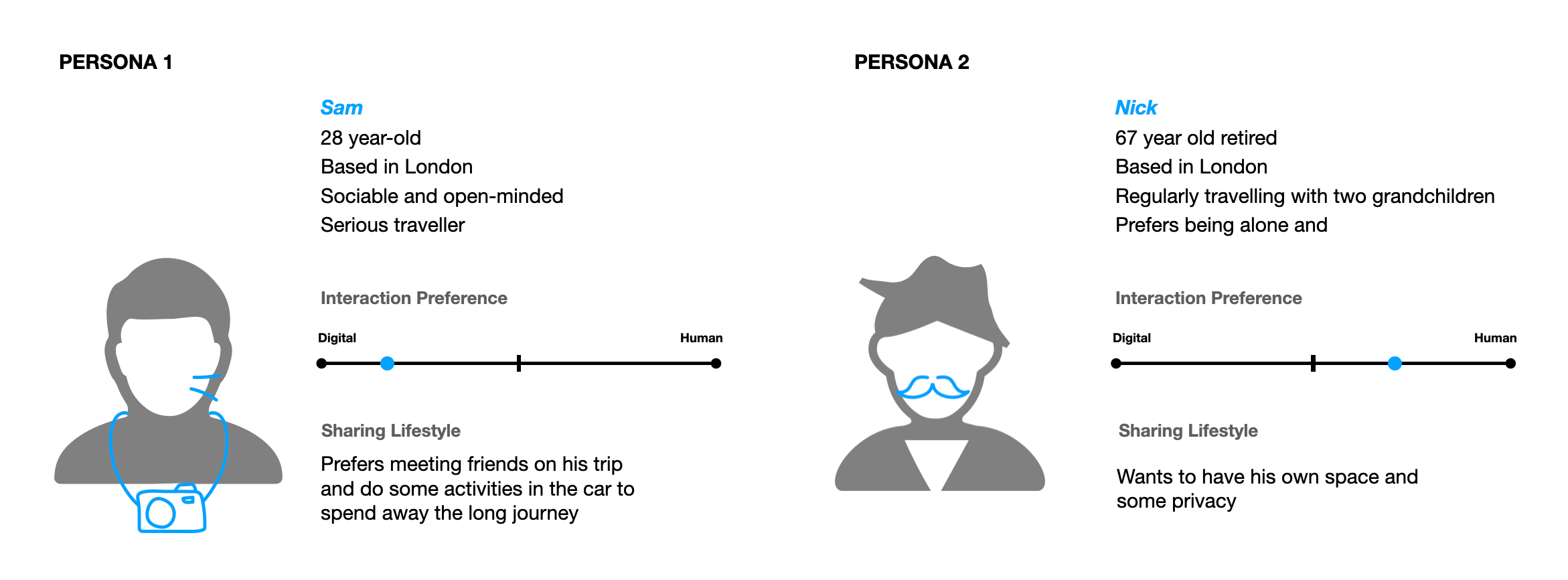
We used two personas to explore contrasting needs.
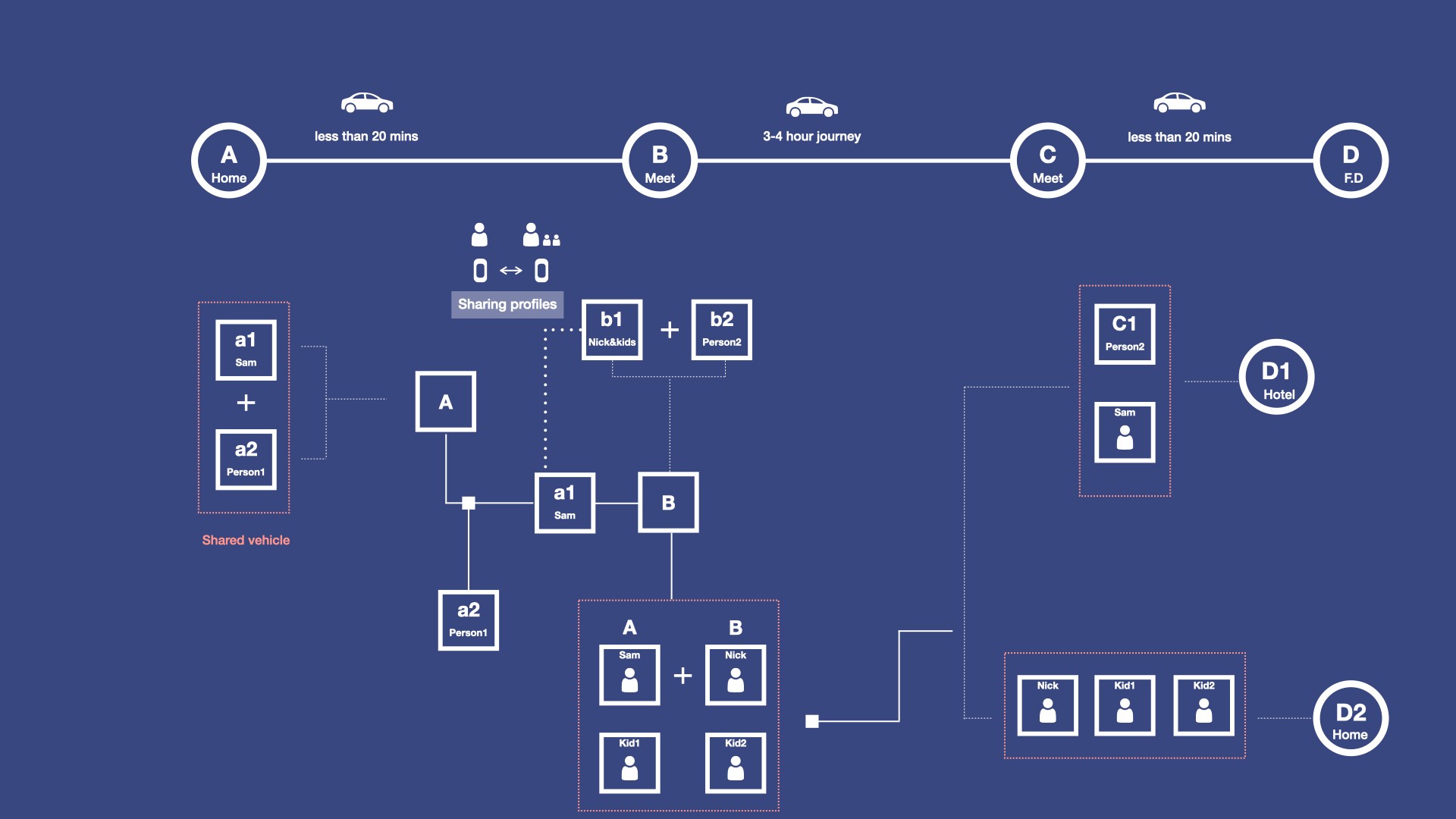
Sam, a sociable solo traveller, wanted opportunities to meet people and take part in activities during a long journey. Nick, a retired traveller accompanying his two grandchildren, prioritised personal space and privacy.
Their scenarios helped us examine how the same service could accommodate social interaction, quiet time and travelling as a family.
Mapping the whole journey
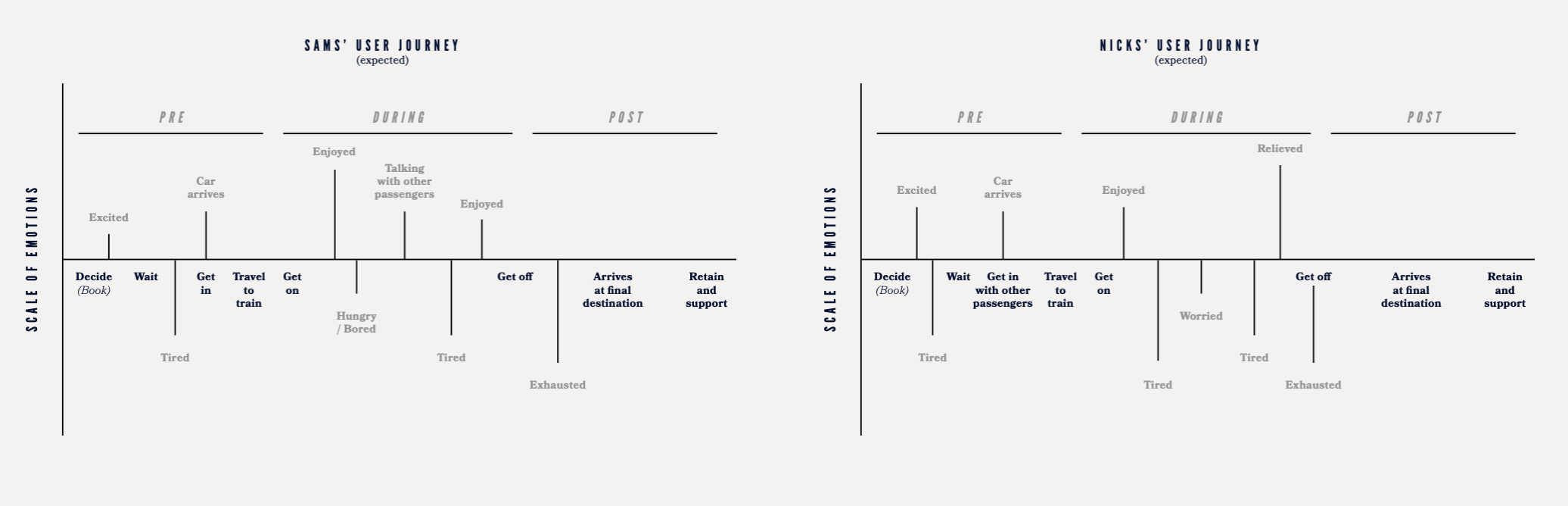
I mapped the experience from booking and waiting through local travel, transfers, the intercity journey and arrival.
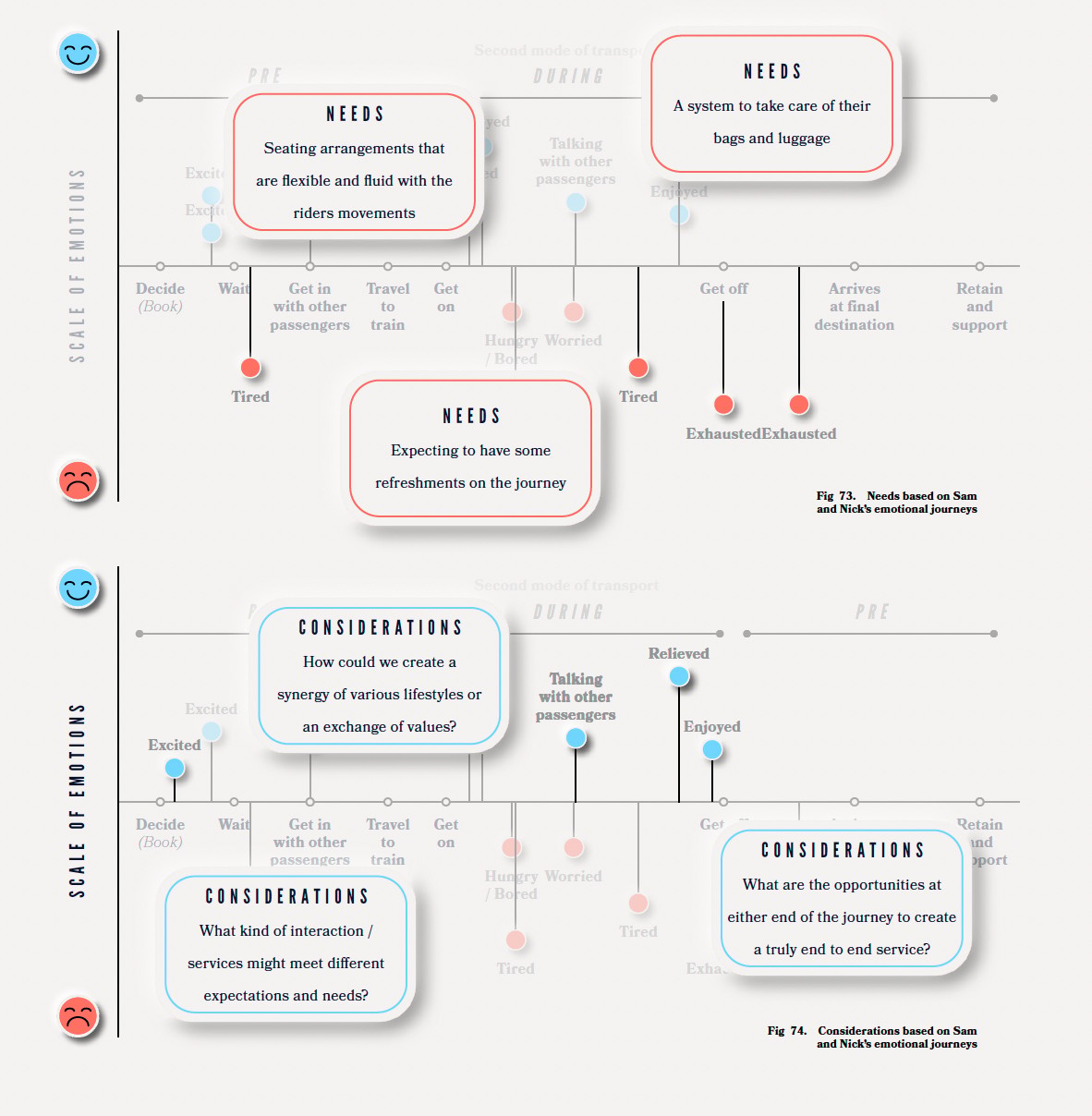
The anticipated emotional journeys highlighted potential friction around tiredness, boredom, luggage and travelling with unfamiliar passengers. These were scenario-based considerations used to develop the concept, rather than measured outcomes.
The mapping informed three priorities:
Continuity across the journey: connect local and intercity travel within one service.
Choice of space: offer both private accommodation and opportunities to socialise.
Practical support: account for luggage, refreshments and changing needs during the trip.
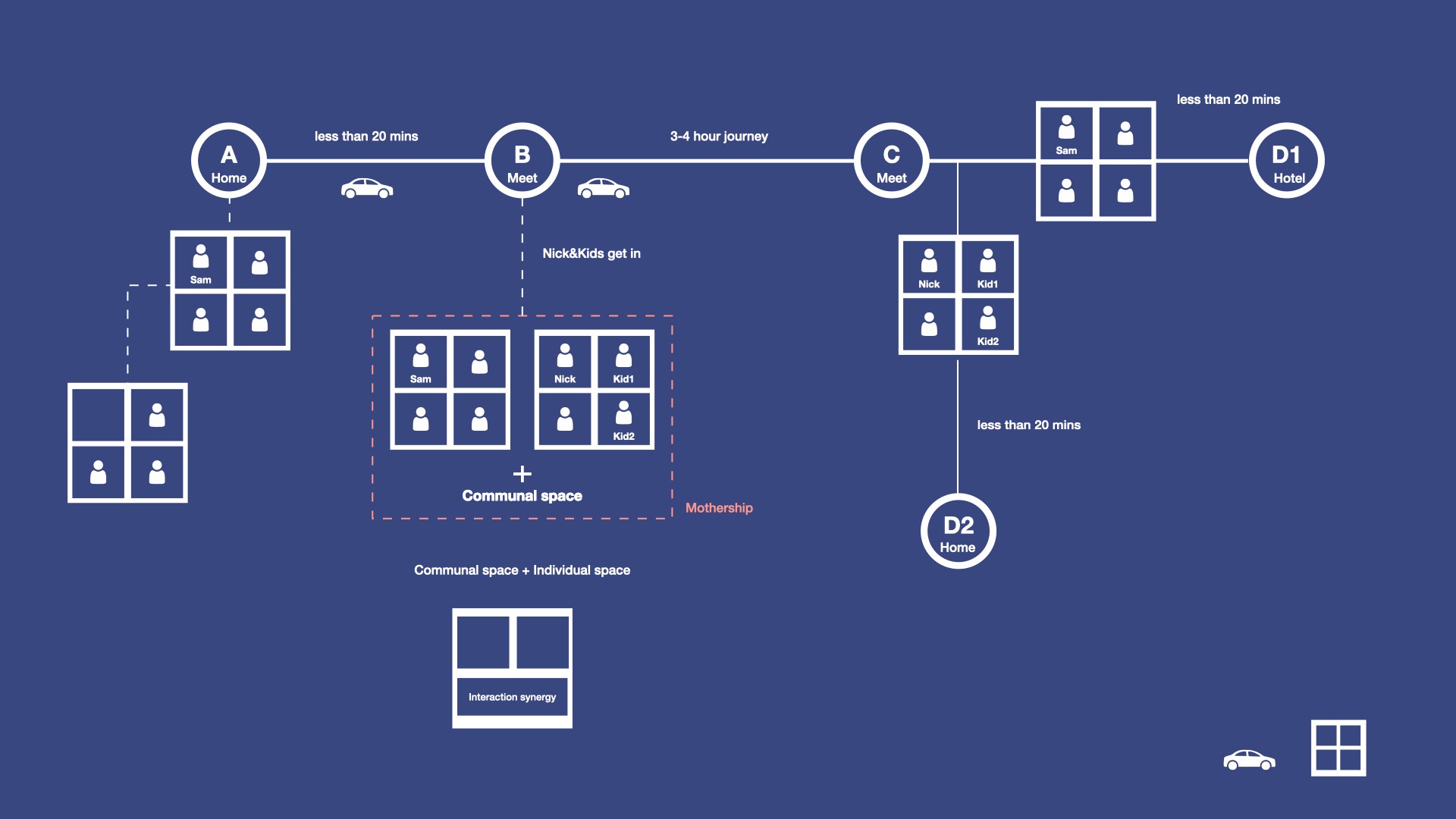
Connecting local pods with a shared mothership
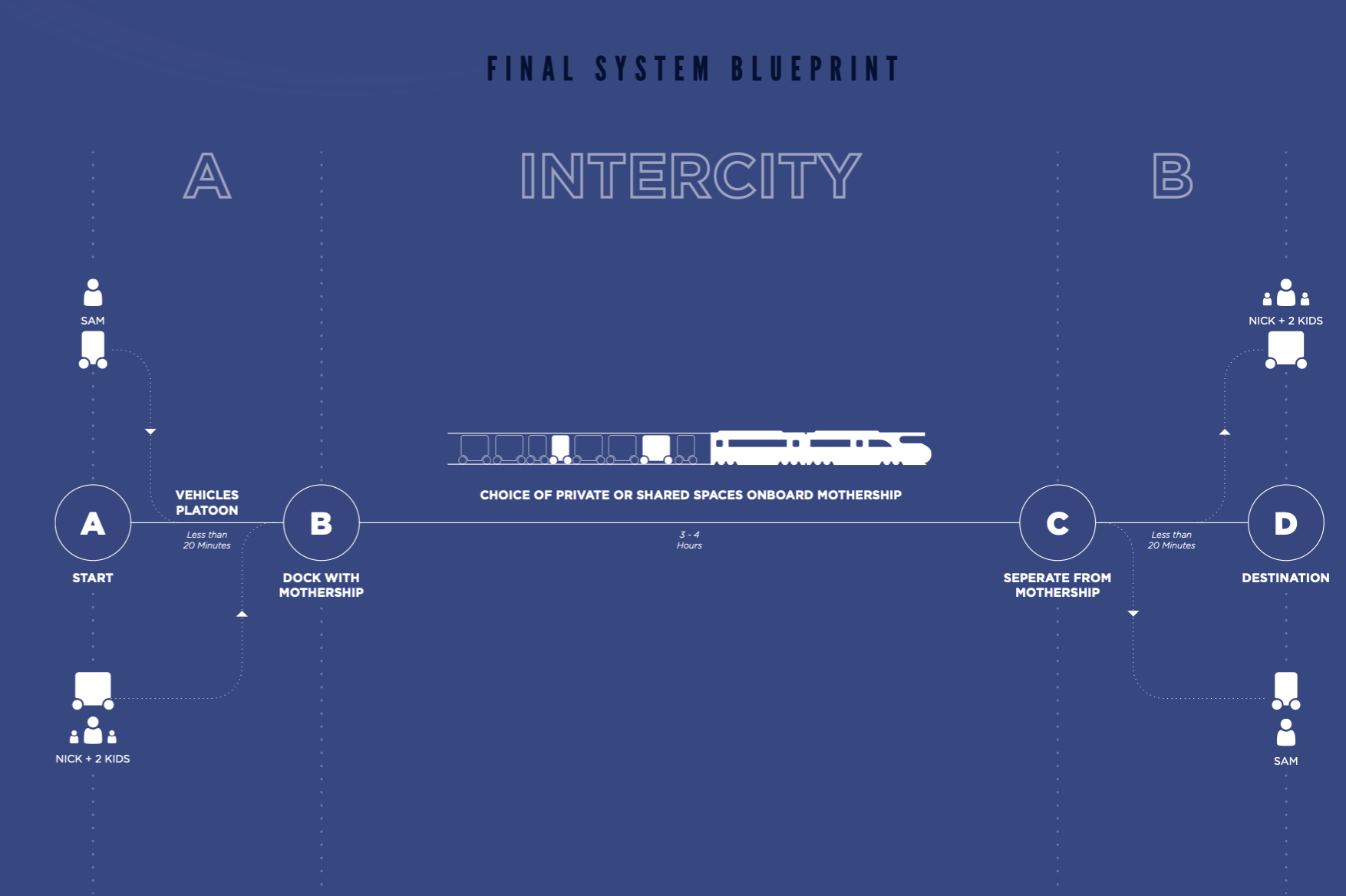
The proposed system follows four stages:
Depart: passengers begin their journey in a local pod.
Join: pods dock with the mothership for the intercity leg.
Travel: passengers choose between their private space and shared onboard areas.
Separate and arrive: pods leave the mothership and continue towards individual destinations.
This arrangement connects different routes and travelling groups while preserving a choice of personal space.
Making the service work behind the experience
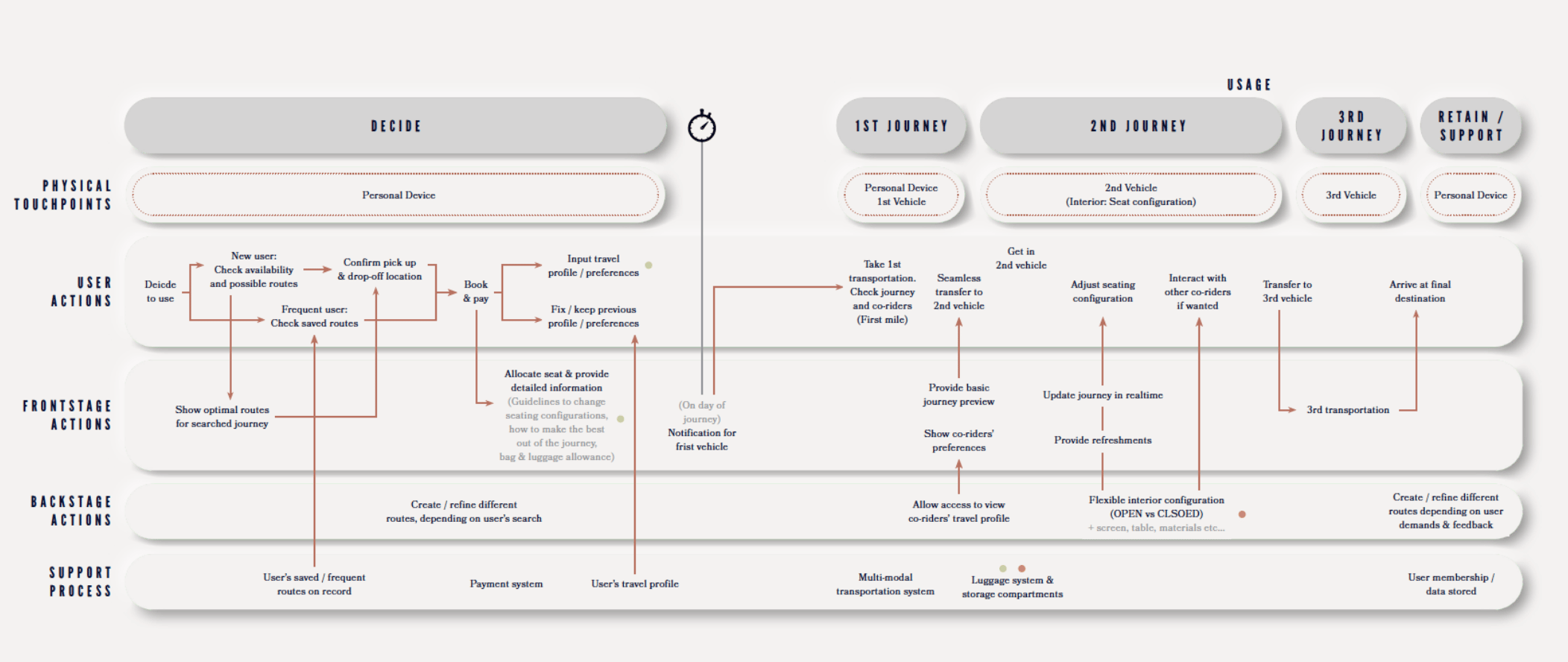
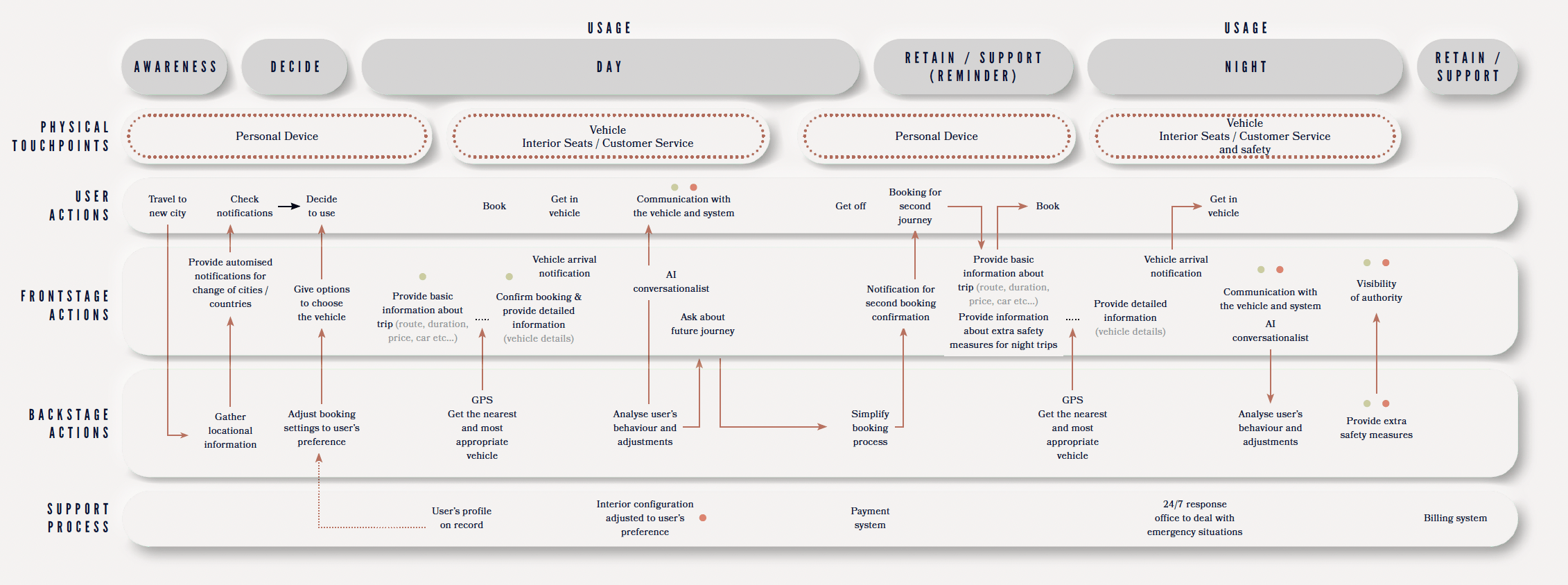
I mapped the proposed customer journey against frontstage interactions, backstage actions and supporting systems.
The service blueprint connected booking and payment, travel preferences, seat allocation, journey updates, luggage handling and onward transport. It made the dependencies between the digital service, transport system and interior experience explicit.
Translating the service into physical space
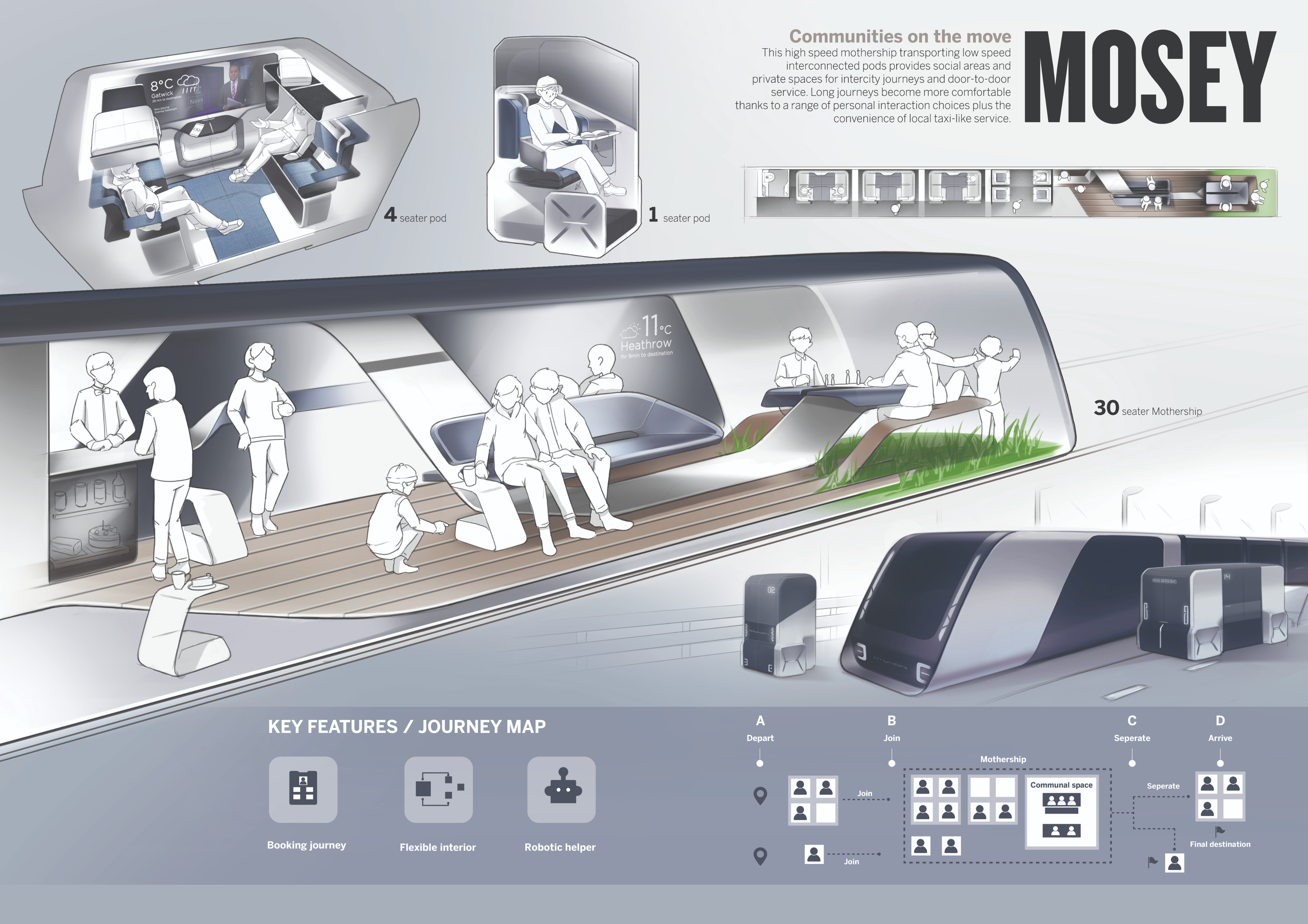
The vehicle direction combined one-seat and four-seat pods with communal areas aboard the mothership.
Private spaces accommodated solo travellers and small groups, while shared areas offered room to move, spend time together and meet other passengers. The central design decision was to make social participation a choice throughout the longer journey.
04 / NANO
Shared vehicles, safe spaces
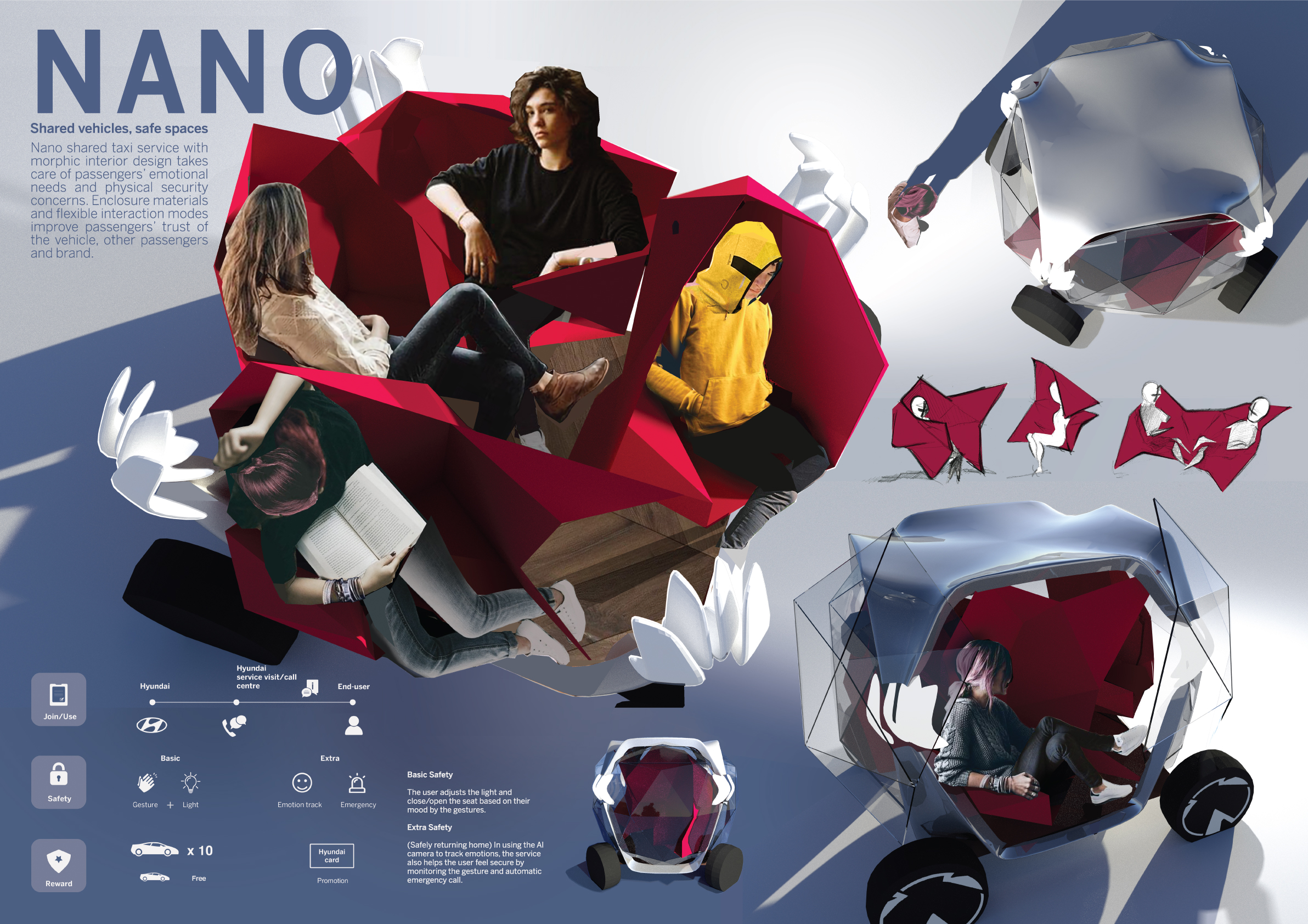
NANO explores shared taxi journeys of under an hour, focusing on the uncertainty people may feel when travelling with strangers.
How might a shared mobility service help passengers feel comfortable and in control, from booking to arrival?
Considering how needs change during the day
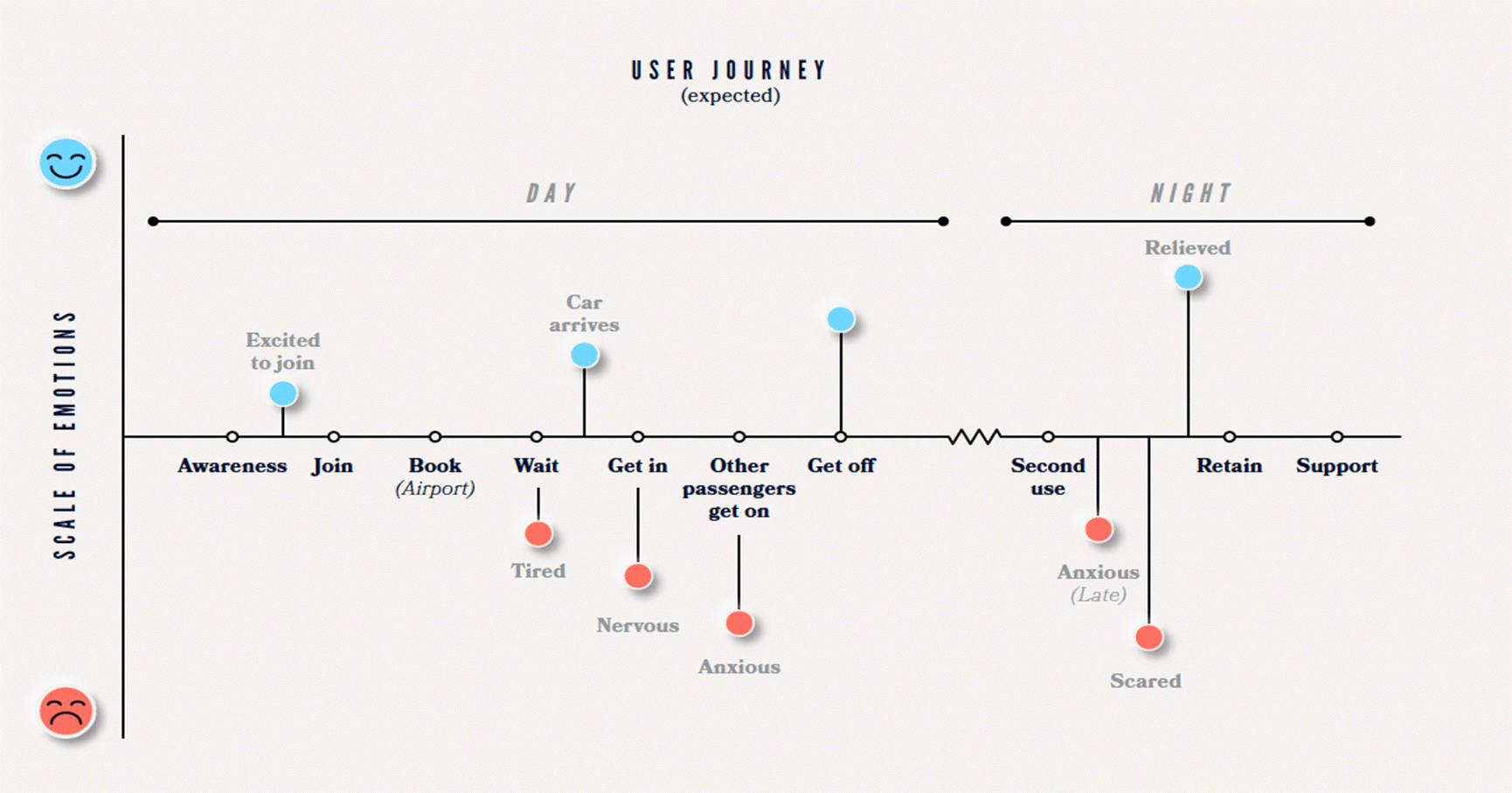
I developed a service scenario spanning daytime and night-time journeys to examine how passengers’ preferences and concerns could change with the context.
Someone might welcome conversation on one trip and want quiet or greater separation on another. Travelling at night also brought reassurance and access to support into focus.
I used these scenarios to define a service direction organised around safety, personal control and optional interaction.
Giving passengers control over their space
I defined experience requirements that allowed passengers to choose their level of interaction and personal space.
NANO translated these requirements into an adaptable interior with adjustable partitions and lighting, alongside quiet, reading and interaction modes.
The intention was to let passengers communicate and act on their preferences through the physical environment. They could choose greater enclosure or a more open arrangement, depending on how they wanted to travel.
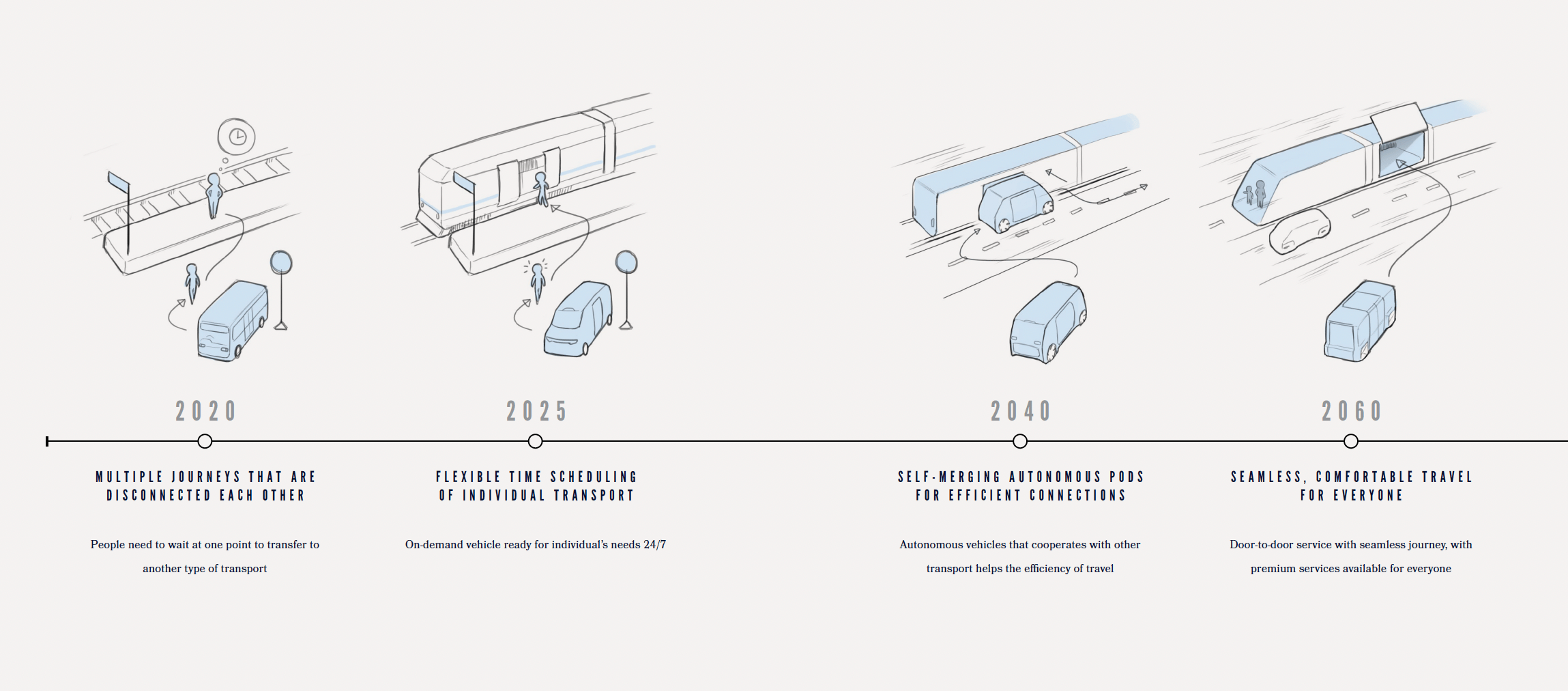
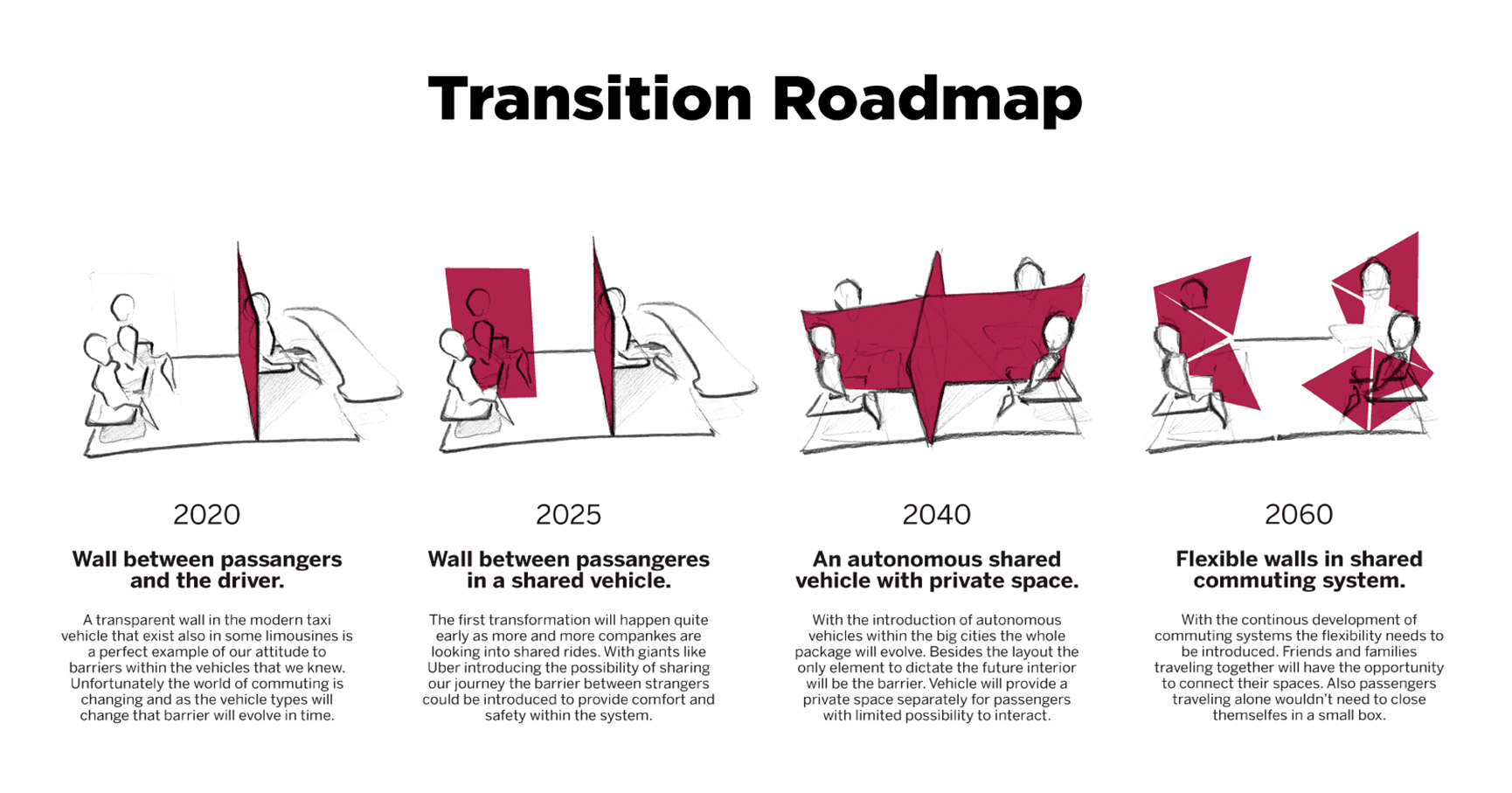
A transition roadmap explored how fixed barriers could evolve into more flexible personal spaces within future shared vehicles.
Connecting the interior with service support
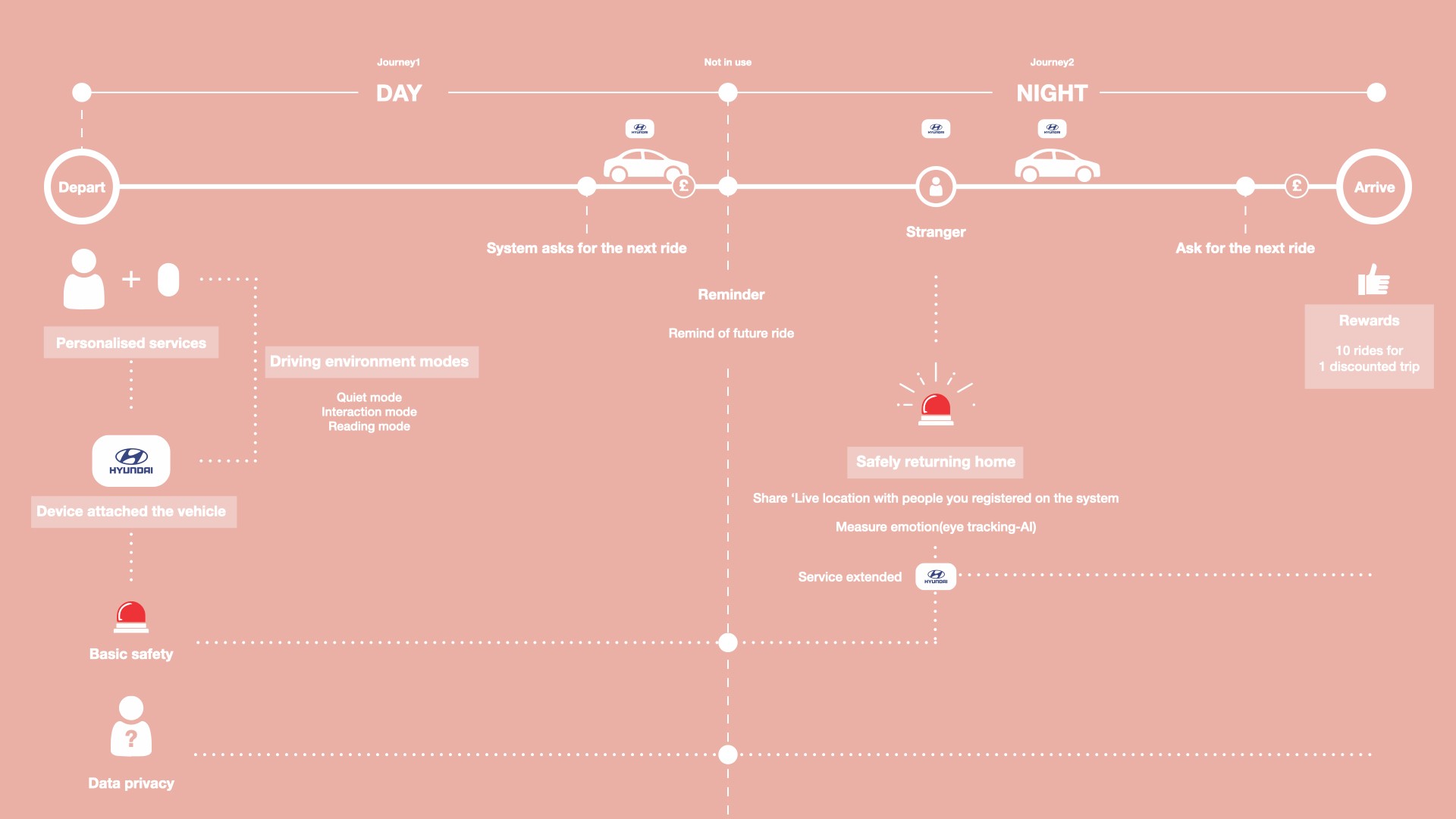
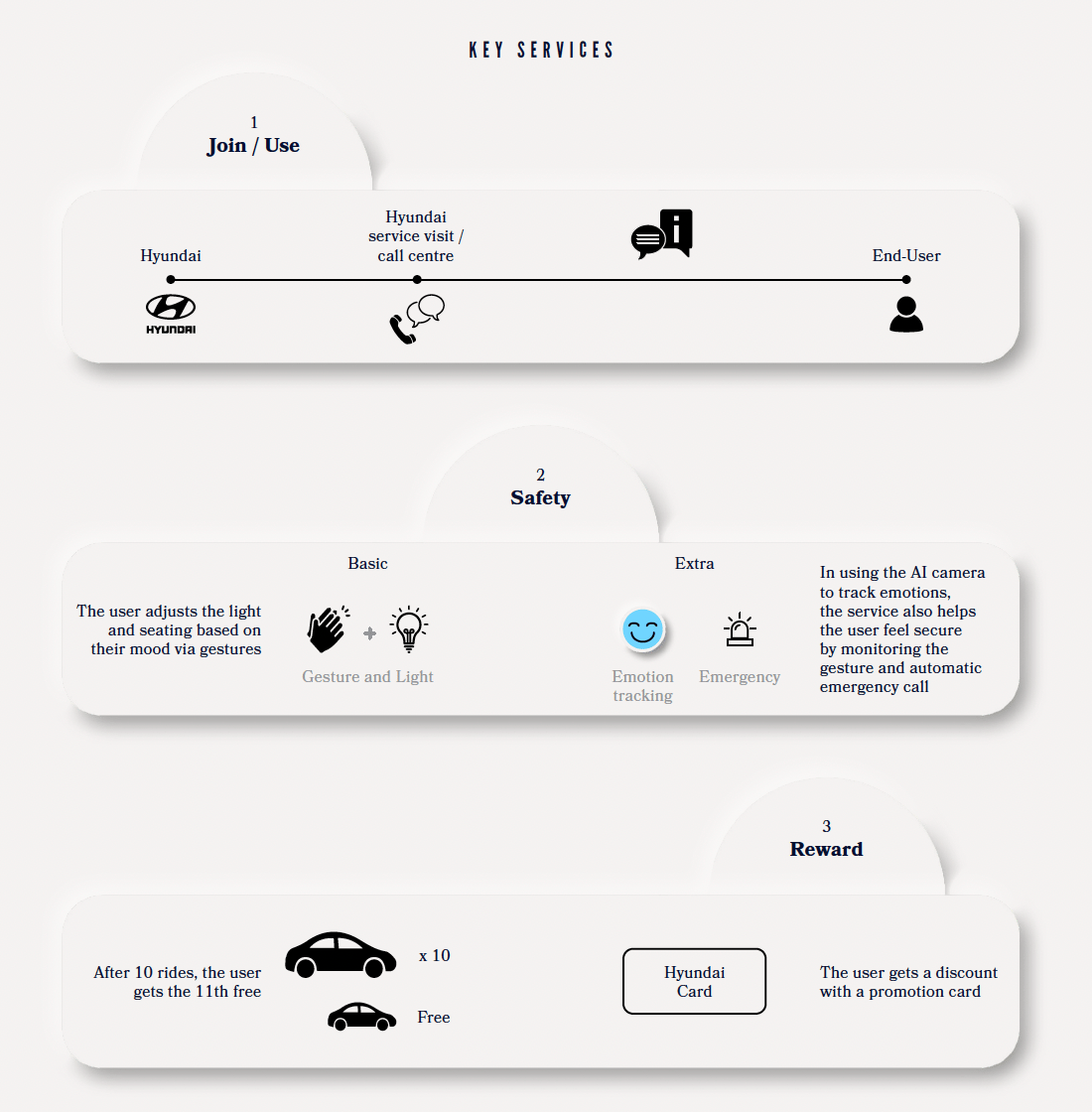
I extended the service beyond the seat, connecting personal preferences with booking, journey reminders, live-location sharing with chosen contacts and access to assistance.
The original concept also explored emotion sensing and automated emergency support as speculative features. These were future proposals, not validated safety capabilities.
By connecting the journey with the interior experience, I positioned reassurance as a service-wide consideration rather than a single vehicle feature.
05 / OUTCOME
Two concepts connecting service design with vehicle experience
My service design work for MORPH developed two contrasting mobility directions:
MOSEY connected local and intercity travel through a modular system, balancing private space with opportunities for social interaction.
NANO explored personal boundaries and reassurance within shorter shared journeys through adaptable interiors and service support.
Across both concepts, I developed the briefs, personas, scenarios, journey maps and service structures, then translated them into requirements that informed the vehicle experiences.
The outputs were future service and vehicle concepts. Their usability, operational feasibility and effects on passenger comfort and trust would require further validation.
JOURNEY MAPPING
Mapped booking, waiting, local travel, transfer and arrival to identify where continuity, luggage support and space preferences needed to be addressed.
SERVICE EXPERIENCE
Connected passenger needs and anticipated friction across the whole journey; these were scenario-based considerations rather than measured user outcomes.
SERVICE STRUCTURE
Connected frontstage interactions with backstage actions and supporting systems, including booking, payment, seat allocation and journey updates.
DESIGN DECISION · NANO
Explored a transition from fixed interior barriers towards more flexible personal spaces, informed by different preferences for privacy and interaction.
SERVICE SUPPORT · NANO
Extended reassurance beyond the vehicle interior through journey reminders, selected-contact location sharing and access to assistance. Speculative safety features were not validated.
Jinnie Hyojin Bae
← Work
HYUNDAI MORPH
Developed for Hyundai’s MORPH project, MOSEY and NANO connect future travel scenarios with service systems and vehicle experiences. I contributed to research and framing across MORPH’s four themes and was responsible for all service design work across MOSEY and NANO. Detailed research is omitted to comply with the NDA.
ROLE Service Designer INDUSTRY Automotive / Mobility DURATION 2020
Service Design Research & Framing Journey Mapping Concept Development
01 / THE CHALLENGE
What does it mean to share a journey?
MORPH explored how the sharing economy could reshape mobility services and vehicle design.
Sharing a vehicle introduces questions beyond access and ownership. Who are passengers comfortable travelling with? When do they want to interact? How much privacy and control do they need?
My challenge was to translate changing lifestyles and expectations into service concepts that addressed both the practical and emotional experience of travel.
02 / FRAMING THE OPPORTUNITY
Two service directions for future mobility
Drawing on the wider project research, I framed future scenarios and identified the jobs people needed a mobility service to fulfil. I developed personas and mapped journeys to connect these needs with service touchpoints and physical spaces.
I developed two service directions:
MOSEY — Communities on the Move. A connected intercity service combining local pick-up and drop-off with a choice of private and communal spaces during longer journeys.
NANO — Shared Vehicles, Safe Spaces. A shared taxi concept exploring how adaptable interiors and service support could give passengers greater reassurance and control when travelling with strangers.
I centred both service concepts on the same principle: sharing transport should allow people to choose how they share the experience.
03 / MOSEY
Communities on the move
MOSEY explores a door-to-door mobility service that connects local travel with longer intercity journeys. One- and four-seat pods join a larger carrier, the “mothership”, where passengers can choose between private spaces and communal areas.
How might we make a shared journey convenient while accommodating different needs for privacy and interaction?
Designing for different travel preferences
We used two personas to explore contrasting needs.
Sam, a sociable solo traveller, wanted opportunities to meet people and take part in activities during a long journey. Nick, a retired traveller accompanying his two grandchildren, prioritised personal space and privacy.
Their scenarios helped us examine how the same service could accommodate social interaction, quiet time and travelling as a family.
Mapping the whole journey
I mapped the experience from booking and waiting through local travel, transfers, the intercity journey and arrival.
The anticipated emotional journeys highlighted potential friction around tiredness, boredom, luggage and travelling with unfamiliar passengers. These were scenario-based considerations used to develop the concept, rather than measured outcomes.
The mapping informed three priorities:
Continuity across the journey: connect local and intercity travel within one service.
Choice of space: offer both private accommodation and opportunities to socialise.
Practical support: account for luggage, refreshments and changing needs during the trip.
Connecting local pods with a shared mothership
The proposed system follows four stages:
Depart: passengers begin their journey in a local pod.
Join: pods dock with the mothership for the intercity leg.
Travel: passengers choose between their private space and shared onboard areas.
Separate and arrive: pods leave the mothership and continue towards individual destinations.
This arrangement connects different routes and travelling groups while preserving a choice of personal space.
Making the service work behind the experience
I mapped the proposed customer journey against frontstage interactions, backstage actions and supporting systems.
The service blueprint connected booking and payment, travel preferences, seat allocation, journey updates, luggage handling and onward transport. It made the dependencies between the digital service, transport system and interior experience explicit.
Translating the service into physical space
The vehicle direction combined one-seat and four-seat pods with communal areas aboard the mothership.
Private spaces accommodated solo travellers and small groups, while shared areas offered room to move, spend time together and meet other passengers. The central design decision was to make social participation a choice throughout the longer journey.
04 / NANO
Shared vehicles, safe spaces
NANO explores shared taxi journeys of under an hour, focusing on the uncertainty people may feel when travelling with strangers.
How might a shared mobility service help passengers feel comfortable and in control, from booking to arrival?
Considering how needs change during the day
I developed a service scenario spanning daytime and night-time journeys to examine how passengers’ preferences and concerns could change with the context.
Someone might welcome conversation on one trip and want quiet or greater separation on another. Travelling at night also brought reassurance and access to support into focus.
I used these scenarios to define a service direction organised around safety, personal control and optional interaction.
Giving passengers control over their space
I defined experience requirements that allowed passengers to choose their level of interaction and personal space.
NANO translated these requirements into an adaptable interior with adjustable partitions and lighting, alongside quiet, reading and interaction modes.
The intention was to let passengers communicate and act on their preferences through the physical environment. They could choose greater enclosure or a more open arrangement, depending on how they wanted to travel.
A transition roadmap explored how fixed barriers could evolve into more flexible personal spaces within future shared vehicles.
Connecting the interior with service support
I extended the service beyond the seat, connecting personal preferences with booking, journey reminders, live-location sharing with chosen contacts and access to assistance.
The original concept also explored emotion sensing and automated emergency support as speculative features. These were future proposals, not validated safety capabilities.
By connecting the journey with the interior experience, I positioned reassurance as a service-wide consideration rather than a single vehicle feature.
05 / OUTCOME
Two concepts connecting service design with vehicle experience
My service design work for MORPH developed two contrasting mobility directions:
MOSEY connected local and intercity travel through a modular system, balancing private space with opportunities for social interaction.
NANO explored personal boundaries and reassurance within shorter shared journeys through adaptable interiors and service support.
Across both concepts, I developed the briefs, personas, scenarios, journey maps and service structures, then translated them into requirements that informed the vehicle experiences.
The outputs were future service and vehicle concepts. Their usability, operational feasibility and effects on passenger comfort and trust would require further validation.
JOURNEY MAPPING
Mapped booking, waiting, local travel, transfer and arrival to identify where continuity, luggage support and space preferences needed to be addressed.
SERVICE EXPERIENCE
Connected passenger needs and anticipated friction across the whole journey; these were scenario-based considerations rather than measured user outcomes.
SERVICE STRUCTURE
Connected frontstage interactions with backstage actions and supporting systems, including booking, payment, seat allocation and journey updates.
DESIGN DECISION · NANO
Explored a transition from fixed interior barriers towards more flexible personal spaces, informed by different preferences for privacy and interaction.
SERVICE SUPPORT · NANO
Extended reassurance beyond the vehicle interior through journey reminders, selected-contact location sharing and access to assistance. Speculative safety features were not validated.